
THE WILD WEST (of 95): DEERING PARK
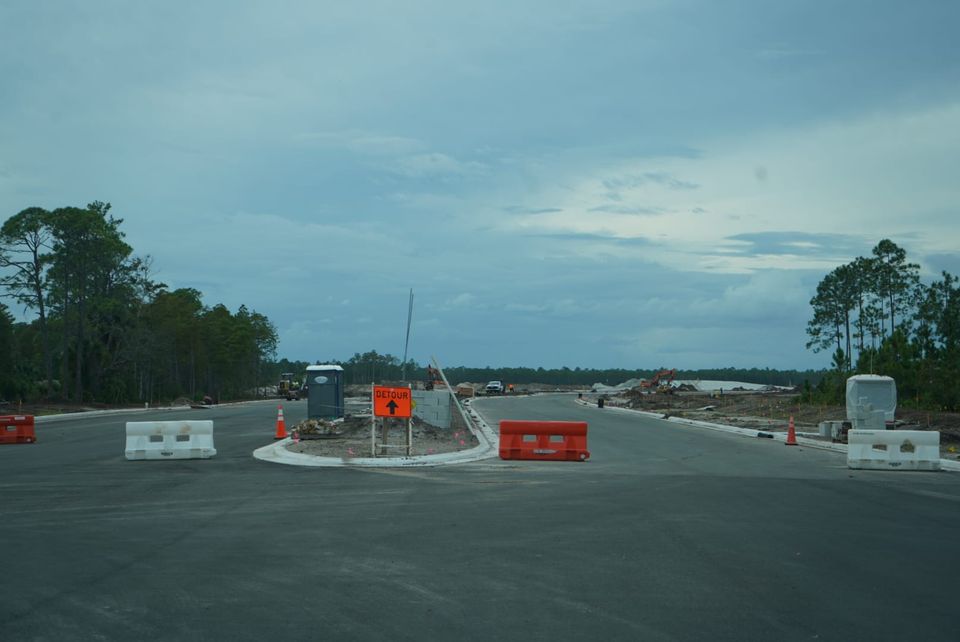
If you grew up around New Smyrna and Edgewater, you don't have to study a planning document or attend a city meeting to see the place changing. You see it every day on the way across town. Another lot cleared, new road work, a sign you've never noticed posted in front of another patch of trees. For most of my life, the empty stretch west of town was part of what made this area feel like the coast instead of an extension of Orlando.
Now the gap is closing, and Deering Park is a big reason why. Edgewater’s community-data page lists 11,776 housing units which accounts for the last century of growth. Deering Park North alone allows 6,600 more, plus 2.8 million square feet of commercial space. This single project of 6,600 homes amount to over 50 percent of the current housing units.
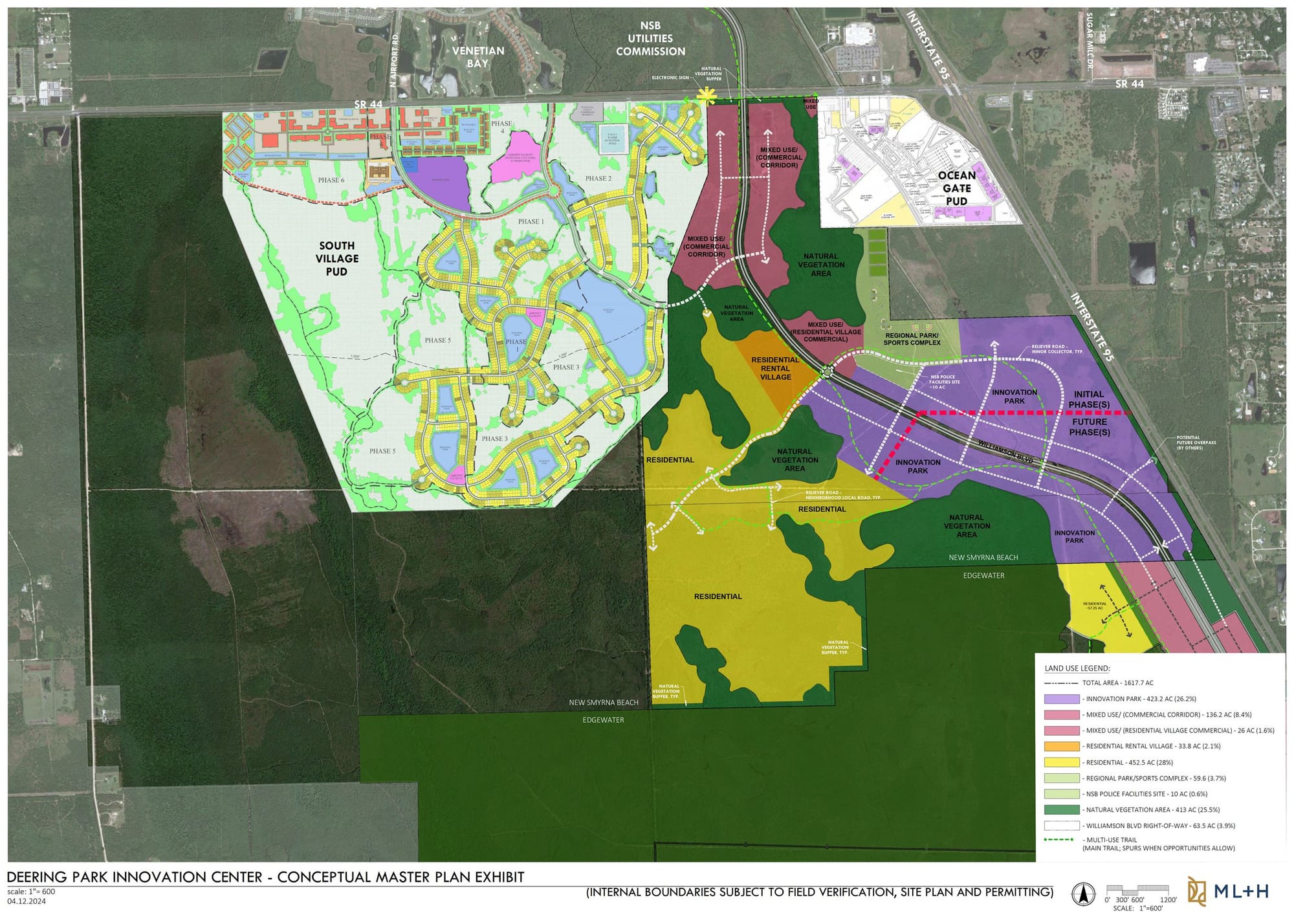
The city says Deering Park and other approved projects could eventually double its population over the coming decades. New Smyrna Beach has also approved an additional 2,150 homes and six million square feet of commercial and light industrial space in the Deering Park Innovation Center.
Those numbers are big enough to make the phrase "just another subdivision" feel out of touch. This is an entire new population center being built not just beside our existing towns, but within them. It has been moving through the system for years through planning amendments, development agreements, utility commitments and phase approvals, each turning a little more of the vision into something real. Nothing I found requires a conspiracy to explain it. The unsettling part is how much can change through completely ordinary government decisions made one meeting at a time.
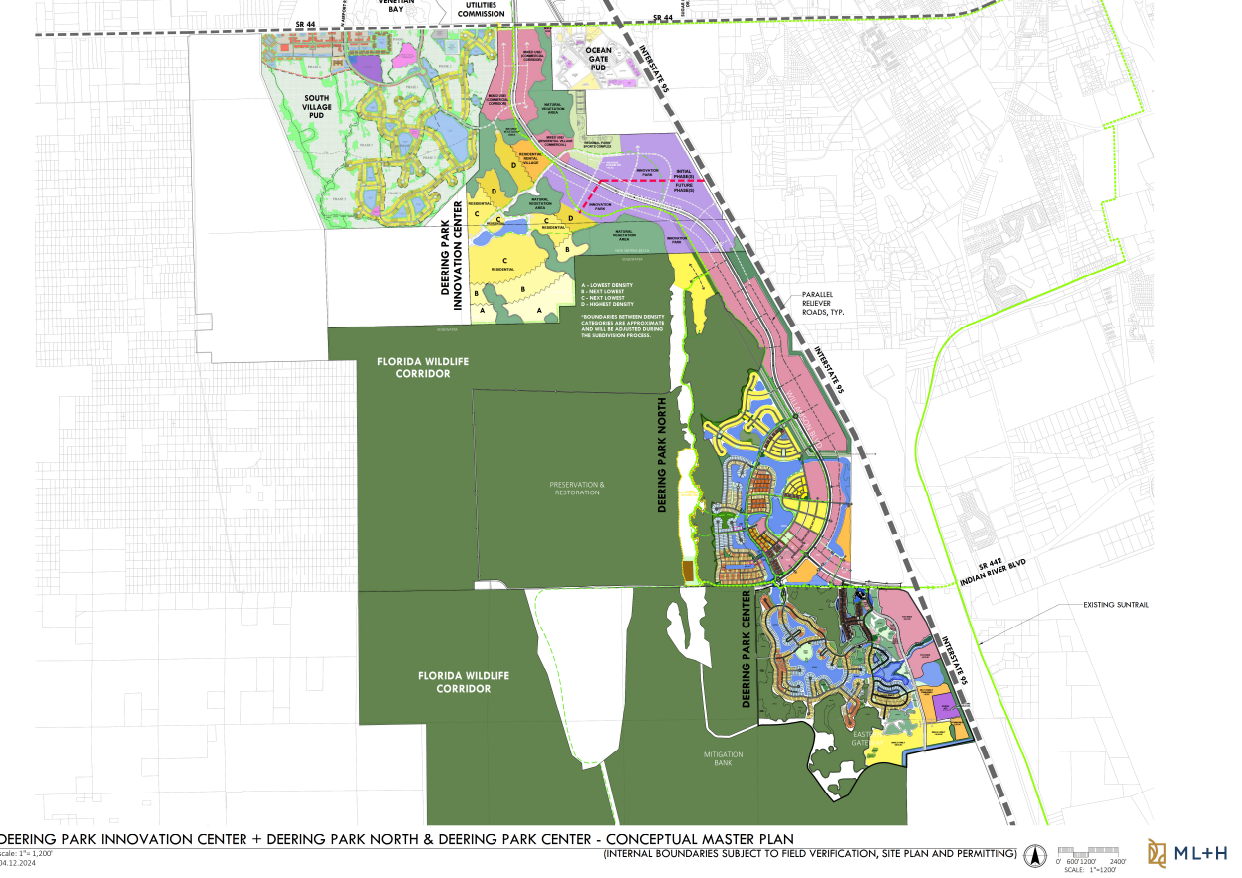
At this point, Deering Park is happening. The special district created in 2020 covers about 64,135 acres across a much larger planning area than Deering Park North alone. In January 2024, a court validated up to $23.6 billion in bond authority for infrastructure across the district’s expected development life of more than 50 years. That is a ceiling for the broader district, not money already borrowed or the price tag for the 6,600-home North project. The attorneys who handled the case called it Florida’s largest special district bond validation.
Brookfield Kolter says development started in 2025. On June 1, 2026, Edgewater approved a preliminary plat and construction plans for a 347-unit first phase of Deering Park North. That approval concerns subdivision infrastructure; it does not mean 347 homes have been built.
I often see comments online saying Deering Park was approved long ago and nothing can be done. The framework is largely in place, but that is not the same as every decision being settled.
The broad vision is old. However, many of the decisions that turn that vision into actual neighborhoods are still happening in our local governments:
- New Smyrna Beach changed the future land use for the Innovation Center property in 2024.
- Edgewater approved a wastewater agreement with Deering Park in 2025.
- Edgewater approved the first residential construction plans in June 2026.
Edgewater is not pretending it wants to remain the same size either. Its own development page says Deering Park North will transform the character and perceptions of the city in very positive ways, and says local leadership is planning for Edgewater to become the largest city in Volusia County over the next 50 years.
That's quite a vision. The question is how the promised benefits will reach Edgewater's current residents, and what tradeoffs they are being asked to accept.
If your measure of success is growth, new rooftops, commercial space and a larger tax base, there is plenty here to be excited about. If what you loved was breathing room, cheap access to the water and a town where working people could still find a place, the same plan can look very different.
The difference becomes hard to ignore when you look at water. Hurricane Ian and the September 2024 flooding left existing Edgewater neighborhoods dealing with damage and major drainage problems. I personally know several families who were flooded repeatedly and faced unexpected costs and debt. Those experiences explain the skepticism about adding thousands of homes. They do not establish that Deering Park caused those floods. The reports below concern existing flooding and residents’ concerns about development; they are not proof of a Deering Park drainage impact.
The city responded with a temporary moratorium on certain permits involving fill while it studied the drainage system. Edgewater is now working from a stormwater master plan that the city said could cost $250 million to $500 million over 25 to 30 years. Phase 1 alone was described as roughly $150 million.
The plan is not a small cleanup of a few ditches. It maps new retention ponds, pump stations, canal work, culverts and major drainage changes across neighborhoods that already exist. City staff have also been analyzing property acquisition as a way to create additional stormwater capacity in Florida Shores. The city says Phase 1 does not involve housing acquisitions; later phases are still being discussed.
I'm glad there is finally some kind of plan. I also understand why somebody whose house floods might not share the excitement about becoming the largest city in the county. The same goes for someone whose property sits where a future drainage concept may eventually need more room for water.
At the same time, Edgewater is preparing major infrastructure for future growth. The city’s wastewater master plan, adopted in February 2026, says projected growth in the rest of the city combined with the Deering Park utility agreement requires the first treatment-plant expansion to be operating by 2033. The estimated first-phase cost is about $93 million, with approximately $19.1 million awarded in state grant funding.
The city also says infrastructure included in Deering Park North’s development agreement will be paid for by the developer. Those obligations and the utility-wide plant expansion need to be considered separately. The figures above do not establish that existing residents owe the remaining balance. What I want to see is a clear account of developer contributions, other funding and any costs left for existing utility customers as the expansion proceeds.
Housing is part of the same worry. Homes in New Smyrna Beach sold for a median of about $420,000 in the three months ending August 2026, according to Redfin. We can't blame those prices on Deering Park. The project is barely beginning. What I can say is that I do not want the future version of this place to become a town where the people who serve the food, teach the kids, work the trades and keep everything running can only enjoy New Smyrna from a commute away. The mix of classes and characters was part of what made this a fun, slightly weird, easygoing beach town in the first place.
That’s where it starts to feel personal. You can build another school, another hospital, another Publix. You can’t build another inlet or another river, and you can’t add more miles to our beach. All those new residents will be sharing the same places we already use. Saturday morning at the boat ramp starts looking a lot different when a whole new city of people wants to launch there too. The worry is that the ordinary stuff—taking the boat out, finding a place on the beach, enjoying a day around town—gets crowded enough that you have to plan your life around it. Leave earlier, wait longer, book ahead, pay more, just to do what used to be normal.
Brookfield Kolter has a much more upbeat way of describing the future. It projects 5,300 jobs at full buildout for the Innovation Center and calls Deering Park's central theme "In the Middle of Everywhere."
Five thousand jobs would be meaningful here, and I hope the employment side of the promise actually shows up. The slogan is still funny if you grew up here. I never wanted to be in the middle of everything. I liked that there was a long run of trees between us and everything inland. I liked that you could get to the coast and feel like you had left something behind.
What the marketing calls connectivity looks a lot like the end of that breathing room for many of us. The woods west of town are being planned decades into the future while the neighborhoods already here are working through flooding, expensive infrastructure, crowded access points and rising housing costs. None of those problems can fairly be pinned on Deering Park alone. Deering Park is simply large enough that pretending it will not add pressure to the same roads, water systems, schools, beaches, ramps and public spaces makes no sense to me.
There is no single meeting left where somebody can walk in, say no to Deering Park, and send the bulldozers packing. Too much of the framework is already in place, and actual construction has begun. That does not mean the rest is baked. Current councils, boards and agencies are still approving phases, infrastructure, agreements and the details that decide how this development meets the towns around it. Paying attention now is not about pretending the last twenty years did not happen. It is about understanding that the next twenty have not happened yet.
So when another stretch of trees disappears west of I-95, I do not look at it as random growth anymore. I see a project that has spent decades becoming part of the machinery of local government, legally and mostly in plain sight. I see cities embracing a future built around a lot more people. I also see the people already here wondering whether the water will stay out of their houses, whether they will still be able to afford their neighborhood, and how early they will need to leave home to find somewhere to park the boat.
Deering Park is happening. That is exactly why it is worth looking at closely.
Sources
- Edgewater community data — housing baseline
- Edgewater planned developments — North approvals and conservation
- NSB Deering Park Innovation Center
- Deering Park Stewardship District
- Deering Park Bond Validation
- Edgewater Wastewater Master Plan
- Edgewater Flooding Ordinance
- Edgewater Stormwater Master Plan Costs
- Edgewater Stormwater Master Plan
- Brookfield Kolter Deering Park
- NSB Parking and Boat Ramp Fees
- Redfin: New Smyrna Beach Housing Market
- Deering Park North First 347 Homes Approval
Member discussion