
The Woman’s Club: What Happened to the Building on Magnolia?

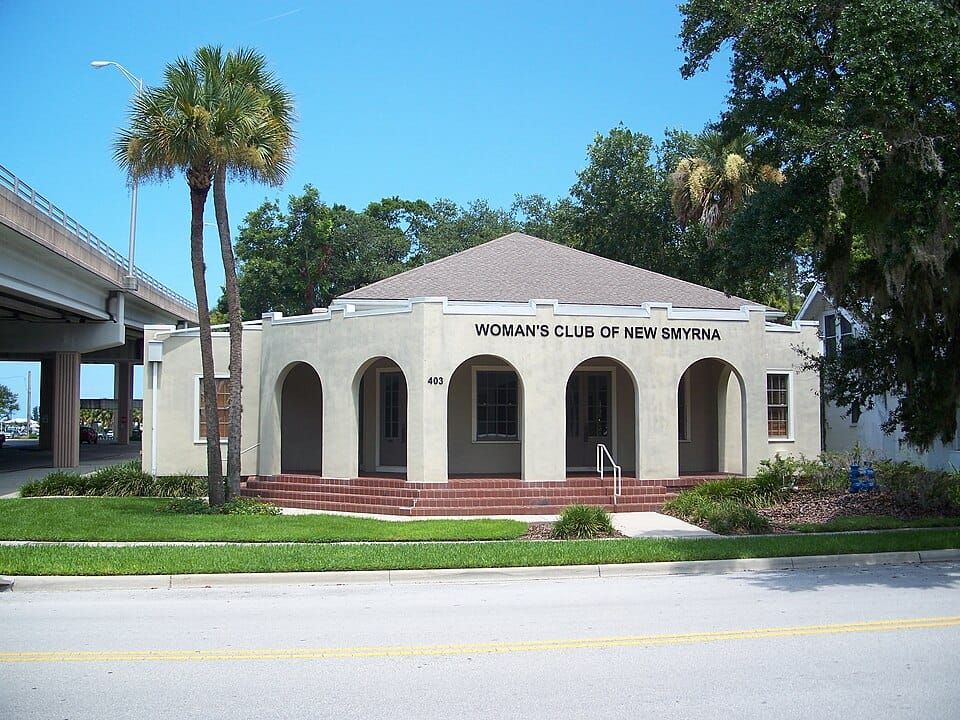
If you’ve been around New Smyrna long enough, there’s a decent chance you’ve been inside the old Woman’s Club on Magnolia Street. Maybe for a wedding, a fundraiser, a recital, or some other event you barely remember attending. For decades, it was one of those places around town that didn’t need much explaining. It was just the Woman’s Club.
Today, the century-old building at 403 Magnolia Street is called The Magnolia, a privately owned event venue that reopened in February 2026. The restoration brought a long-closed landmark back into use, but the change in ownership has also stirred up some conversation online. Particularly the part where the city sold it for $225,000 after spending years and public money trying to restore it.
So what actually happened?
A little history on Magnolia Street
The Woman’s Club dates back to 1911, when local women began organizing fundraisers, teas, and community events to raise money for a permanent clubhouse. By 1918, they’d saved enough to purchase property near Magnolia Street and Lytle Avenue, and in February 1924, the nearly completed building hosted its first event.
Over the decades, it became a familiar gathering place for weddings, civic meetings, performances, and community functions. The city purchased the property in 1990 and continued operating it as a public rental facility. It received a local historic landmark designation in 2018, although by then the aging building was beginning to need some serious attention.
The restoration that got away
The city began planning a restoration in 2018, eventually securing $600,000 in state historic preservation funding and a $267,500 award through Volusia County’s ECHO program. The ECHO grant required a matching city contribution, bringing the planned funding package to approximately $1.135 million.
Not all of that money was spent. Volusia County’s ECHO records show no payment recorded for the Woman’s Club award. The state’s funding, however, was associated with actual expenditures. The city’s 2023 financial audit reports $409,029 in spending tied to the historic restoration grant.
The building needed substantial structural work, particularly around its foundation. In December 2022, commissioners approved a roughly $1.13 million contract with MGN Contracting to stabilize the structure, replace deteriorated supports, and make electrical and mechanical improvements.
Construction uncovered more problems, and the projected cost to complete the restoration eventually approached $3 million. The city canceled the construction contract and decided against continuing the project at that expense. By January 2024, commissioners had voted to sell the property, provided its historic character was protected.
So why $225,000?
Before putting the building up for sale, the city obtained two independent appraisals. One valued the property at $394,000 and the other at $455,000. The $424,500 average became the initial recommended minimum bid.
Only two proposals came in. One offered $85,000 and contemplated demolition. The other offered $225,000 with plans to preserve and rehabilitate the building. That proposal came from the Karter Presley Lynaugh Trust, established by Curtis and Laura Hodges.
At the April 9, 2024 commission meeting, commissioners voted 3–2 to move forward with the trust’s offer, with Lisa Martin and Valli Perrine voting against it.
It was considerably less than the appraised value, but whoever purchased the place was inheriting an unfinished restoration, significant structural problems, and restrictions on what could be done with the property. Not exactly a turnkey investment.
The state grant also factored into the decision. According to the city’s September 10, 2024 sale report, Florida agreed to make approximately $391,460 in historic preservation reimbursement available to the city in connection with a five-year restrictive covenant.
Between that reimbursement and the $225,000 purchase price, the city anticipated recovering approximately $616,460. That helps explain why staff ultimately supported the lower offer, although the records reviewed don’t establish whether the entire reimbursement was collected or how it compared with the city’s total restoration spending.
Commissioners unanimously approved the final sale agreement and covenants on September 10, 2024.
Another grant, another $96,000
In August 2025, the new owner received approval for a $96,238 matching grant through the city’s Community Redevelopment Agency. The money was designated for $192,476 in proposed exterior improvements, including new doors, a rebuilt front porch, an accessible ramp, electrical work, stucco, painting, and landscaping.
Naturally, the timing caught some attention. Less than a year after selling the building for $225,000, the city had approved nearly $100,000 in redevelopment assistance for the same property.
The CRA grant wasn’t a special program created for The Magnolia. It came through an existing matching program for eligible commercial properties in the redevelopment district, with the owner required to document qualifying expenses before receiving reimbursement.
City staff estimated the owners’ overall renovation would exceed $650,000. The final private investment and the amount actually reimbursed through the CRA haven’t been independently confirmed.
Who gets to use it now?
The five-year covenant tied to the state funding requires preservation of the building’s historic character. Even after that agreement expires, the Woman’s Club remains a locally designated historic landmark, so exterior alterations may still require city approval.
The city also approved a historic-building zoning overlay allowing the property to operate as an event venue without the normally required on-site parking.
But there’s a difference between preserving the building and preserving its public use.
For more than thirty years, residents and nonprofits could rent the Woman’s Club through the city. Today, The Magnolia is a private venue, with bookings and prices controlled by the business. The records reviewed don’t establish any requirement to continue the city’s former public rental arrangements.
The owners did take on a restoration the city had decided it couldn’t afford to finish, and the building is back in use after years of uncertainty. That’s a meaningful outcome for a property that’s been part of New Smyrna for more than a century.
There are still some gaps in the financial picture, particularly how much the city ultimately paid contractors before the sale and whether the full state reimbursement was collected. Those figures would help establish the final cost to the public.
For now, we know how the city arrived at its decision, why it accepted the lower offer, and how additional redevelopment money became part of the restoration. The Woman’s Club survived, but it’s no longer a city-owned gathering place. It’s a private business operating out of a building the community originally built for itself.